
Project Case Study: Confucius Institute of Shandong
Completion Date: June 2026
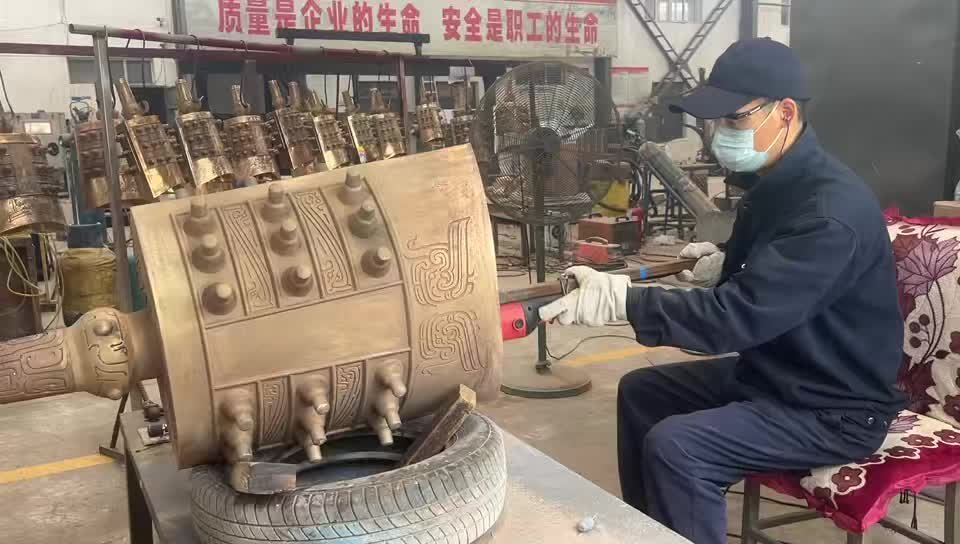
Fabrication Process: Precision Cast Bronze
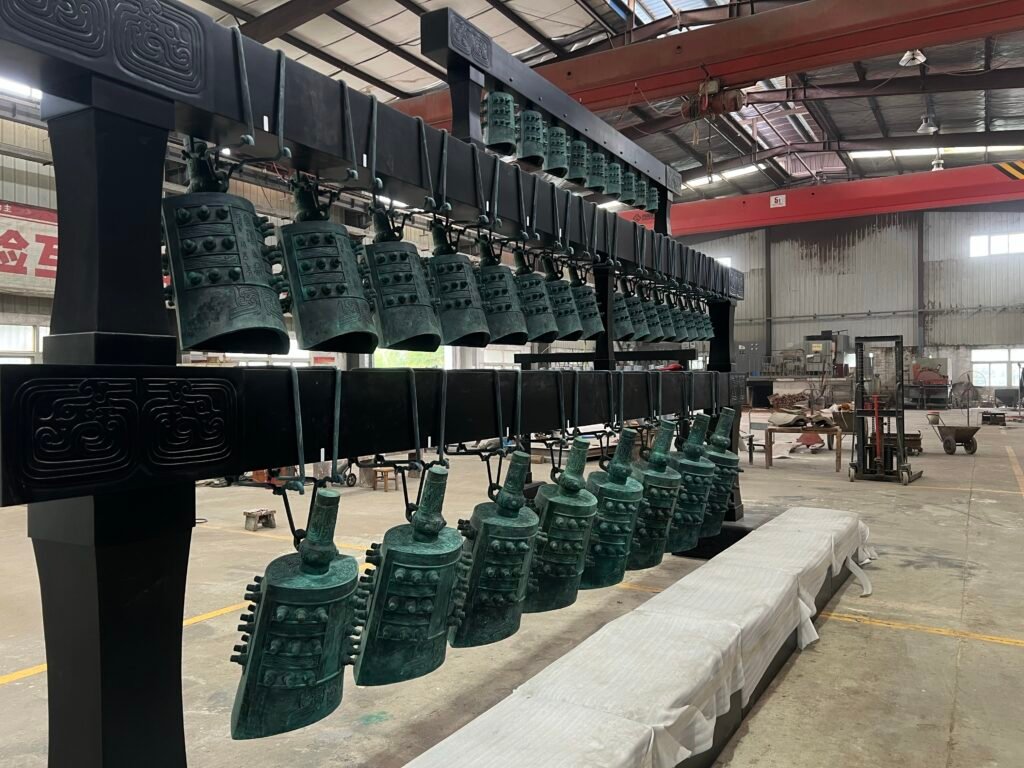
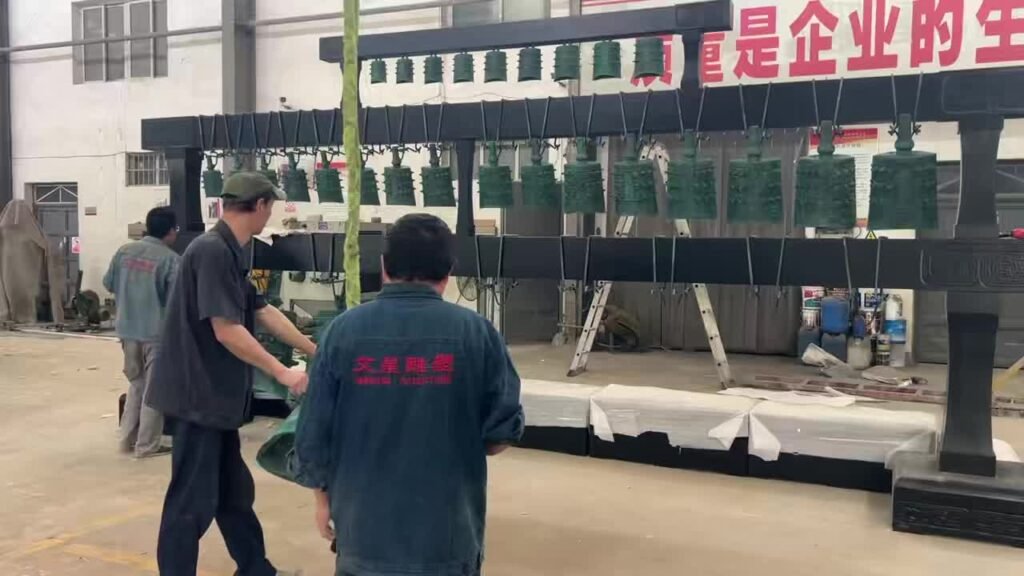
Dimensions: Total Length: 7.5m | Total Height: 2.7m
Scale Details:
Max Height (Lower-tier Yongzhong bells): 1.5m
Min Height (Upper-tier Niuzhong bells): 0.35m
Total Weight: Approximately 3.5 Tons
Bianzhong (Set of Bronze Chime Bells) is the most significant ritual percussion instrument in ancient China, spanning from the Shang and Zhou dynasties to the Warring States period. Originating in the Shang Dynasty and taking its definitive form during the Western Zhou, the instrument reached its zenith during the Spring and Autumn and Warring States periods. As a core ritual implement used by the ancient aristocracy for sacrifices, court assemblies, and royal banquets, it epitomizes the pinnacle of pre-Qin “Ritual and Music” (Li-Yue) civilization.
The most complete surviving specimen is the Chime Bells of Marquis Yi of Zeng from the Warring States period. Unearthed in 1978 from the Tomb of Marquis Yi in Suizhou, Hubei, this ensemble dates back over 2,400 years. It is now the crown jewel of the Hubei Provincial Museum and is officially designated among the first group of national cultural relics prohibited from being exhibited abroad.
Sculptural Anatomy & Structural Engineering
Tiered Configuration
The full ensemble comprises 33 individual bells, architecturally organized into eight groups across three tiers: 9 Niuzhong (ring-handled bells) on the upper tier, 16 Yongzhong (shank-handled bells) on the middle tier, and 8 large Bozhong (ceremonial bells) on the lower tier.
Acoustic Geometry
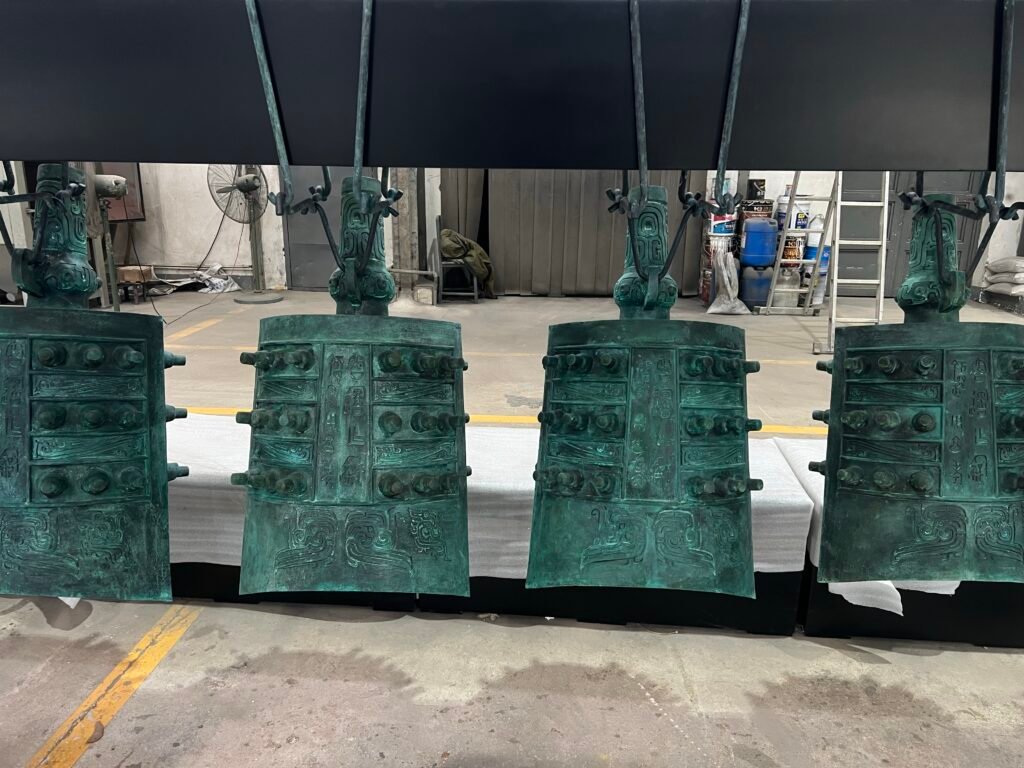
The bells feature a distinctive lens-shaped (double-tile) cross-section, distinguishing them from standard circular bells. This specific geometry is the critical structural prerequisite that enables a single bell to produce two distinct musical tones depending on the strike point.
Ornate Inscriptions & Motifs
The surfaces are elaborately adorned with traditional nipple motifs (bosses) and interlaced Pan-chi dragon patterns. Meticulously engraved onto the bell bodies are technical inscriptions in bronze script (Jinwen) detailing ancient musical temperament and scales.
Structural Support Infrastructure
The three-tier, L-shaped frame is supported by six monumental bronze warrior figures upholding the crossbeams. This robust structure strictly adheres to the “Xuanxuan” ritual protocol of the Zhou Dynasty, featuring a formal three-sided suspension system that reflects the highest aristocratic status.
Cultural Significance & Academic Value
Technological & Acoustic Innovation
The lens-shaped acoustic chamber facilitates the unique “dual-tone” phenomenon. Striking the front (sui) and side (gu) drum areas of a single bell produces two distinct notes, typically separated by a major or minor third. With a range spanning five octaves and a complete chromatic 12-semitone system and heptatonic scales, this ensemble effectively redefined the global history of ancient musicology.
Ritualistic & Socio-Political Status
As the physical manifestation of the Zhou Dynasty’s hierarchical rank system, the Bianzhong serves as a supreme symbol of sovereign power and ritualistic order (Li-Yue). Specific suspension protocols dictated its arrangement: a four-sided “Palace Suspension” for the Emperor, a three-sided “Xuan Suspension” for feudal lords, and a two-sided “Pan Suspension” for high officials.
Artistic & Engineering Mastery
Representing the absolute pinnacle of pre-Qin bronze craftsmanship, the Bianzhong is a sophisticated integration of advanced metallurgy, intricate engraving, ancient calligraphy, and precision acoustics and structural mechanics.