
Bronze animal statue cost depends on far more than size or height alone. This guide breaks down the real cost structure — from clay model to installation — using two completed factory projects as reference.
The cost of a bronze animal statue is not determined by height alone. A small standing bear, a rearing horse, and a spread-wing eagle may all be described as “life-size,” yet their requirements for sculpting, mold-making, casting or forging, structural engineering, surface finishing, packaging, and site coordination differ enormously.
This guide explains the main cost drivers and shows you how to request comparable, apples-to-apples quotes.
What Buyers Need to Compare
A complete bronze animal sculpture quote typically covers the cost components listed below. Before comparing suppliers, confirm which items are included — and which are excluded — in each proposal.
Two real project breakdowns from our factory are provided as reference points:
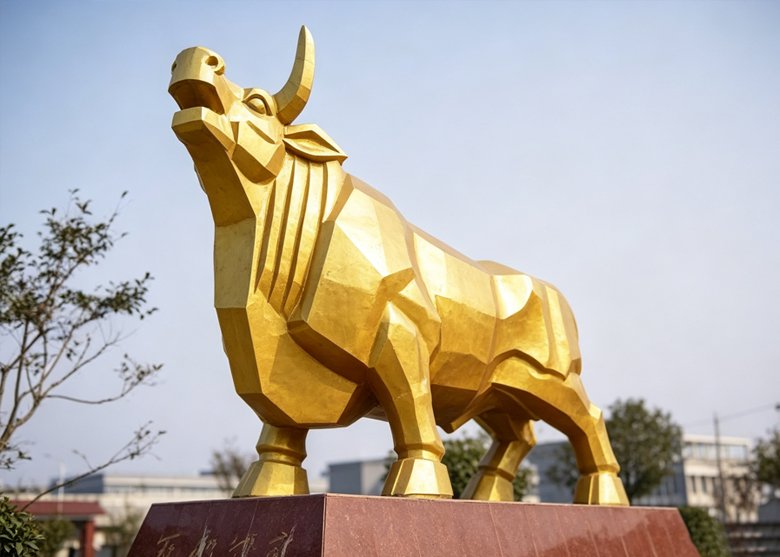
Case Study 1 — “Golden Bull”: Large-Scale Forged Bronze, Public Art
Manufacturer: Winsun Sculpture | Completed: 2011 | Installation: Huangshi, Hubei, China
| Cost Item | Amount (USD) | % of Total |
| Clay sculpting (original model) | $6,200 | 26.9% |
| Forged copper fabrication | $7,700 | 33.3% |
| Surface finish (gold fluorocarbon paint + wax seal) | $1,500 | 6.5% |
| Marble base | $5,400 | 23.4% |
| On-site installation | $2,300 | 9.9% |
| Total | $23,100 | 100% |
Spec: 4 m tall, forged copper, geometric stylized form, gold finish. USD converted from CNY at approx. 6.5 CNY/USD (2011 rate) — for cost-structure reference only. Current material and labor costs are significantly higher.
Case Study 2 — Realistic Bronze Animal Figure: International Export
Destination: Malta (EU) | Process: Lost-wax casting | Size: approx. 60 cm tall
| Cost Item | Amount (USD) | % of Total |
| 1:1 clay model | $5,742 | 48.7% |
| Resin intermediate mold | $211 | 1.8% |
| Bronze casting (ZCuSn4Zn8 alloy) | $2,156 | 18.3% |
| Surface treatment (patina + polyurethane clear coat) | $1,270 | 10.8% |
| International air freight | $2,400 | 20.4% |
| Total | $11,779 | 100% |
Excludes destination import duties and on-site installation. Payment terms: 30% deposit / 40% at production milestone / 30% before shipment.
Both cases illustrate a consistent pattern: clay sculpting or the 1:1 model accounts for 25–50% of total project cost — the single largest line item. For high-realism, original-design commissions, the sculpture creation fee typically exceeds the casting or forging cost itself.
Why Bronze Animal Statue Prices Vary So Widely
Custom bronze sculpture combines creative services, metal fabrication, project management, and site coordination. The bronze alloy itself is only one of many cost inputs. Labor, complexity, approval rounds, logistics, structural requirements, and site conditions typically influence the final budget more than the metal weight alone.
The commercial scope of a quote also varies significantly between suppliers. One may quote factory-only with standard-grade materials; another may price in a longer production schedule with tighter quality controls. Comparing only the bottom-line total — without first aligning scope — can lead to poor procurement decisions.
1. Original Design, Reference Materials & Sculpture Creation
Whether the commission is a commemorative animal, a brand mascot, a champion racehorse, or a wildlife species, the supplier must have clear design reference before pricing. This can be design drawings, reference photographs, or original 3D digital model files. Without complete reference, any quote rests on assumptions that may not match the final approved design.
2. Fabrication Method
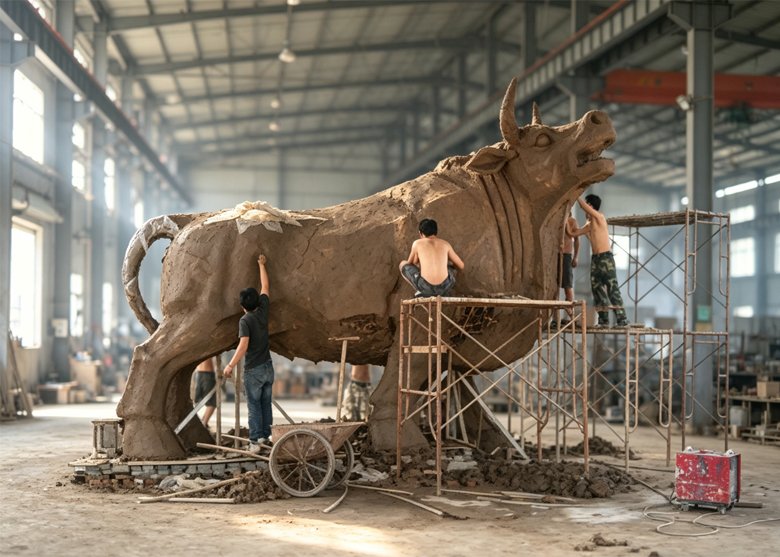
For the Golden Bull, the geometric block form dictated the fabrication method: forged copper was the only viable choice. The next decision was whether to build the reference in clay or use a 3D digital model. Given the client’s demand for lifelike weight and physical presence, we chose clay — it captures the animal’s dynamic tension more faithfully than a digital model rendered at this scale.
Overall dimensions — length, width, forward thrust, tail position, leg spread, and number of ground contact points — all affect production difficulty and structural complexity. Dynamic poses may require concealed internal reinforcement, larger base plates, or segmented fabrication to allow safe transport of very large pieces.
Related Reading: Bronze Animal Statues: 5 Horse Poses by Project Type
3. Mold Making & Sheet Cutting
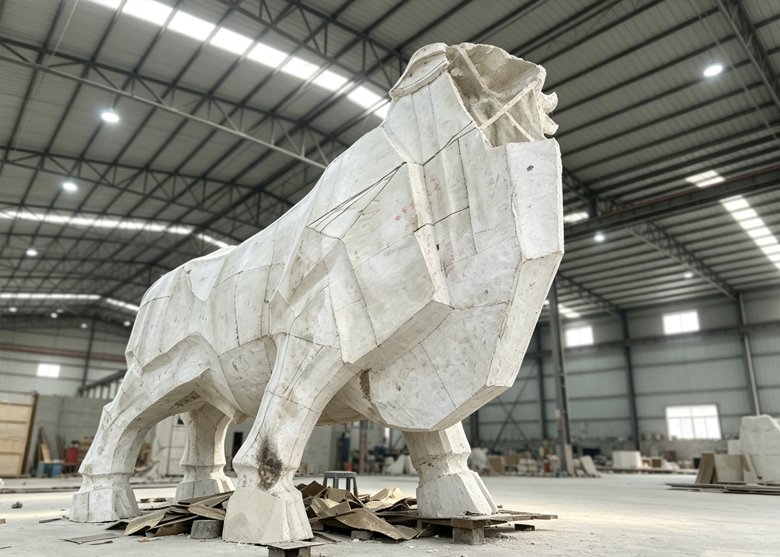
For the Golden Bull, a silicone/fiberglass rigid mold was made directly over the clay original. Large-scale works typically use fiberglass as the master mold, requiring sufficient shell thickness and internal framing to prevent deformation or cracking during the hammering process. Once the mold is complete, it is sectioned and numbered; copper sheets are cut to template using electric shears or plasma cutters, with welding allowances pre-built into each piece.
Related Reading: How Large Bronze Sculptures Are Made: The Lost-Wax Casting Process
4. Heating & Forging
Copper sheets are heated until pliable, then repeatedly hammered to match each numbered section of the mold. The shaped piece is allowed to cool and harden. If it stiffens mid-process it can be reheated, but generally no more than 2–3 times to avoid degrading the material’s structural properties.
5. Assembly & Welding
Forged sections are assembled in numbered order and joined using TIG welding or gas-shielded arc welding. Larger gaps are closed with flame welding. Strict process control throughout is required to prevent warping or twisting of the overall form.
6. Overall Correction & Grinding
After full assembly, the sculpture is checked against the original clay model or reference photographs and corrected where the form has drifted. Weld seams and joints are then ground and polished until all surface transitions are smooth — no visible evidence of welding should remain in the finished piece.
7. Surface Treatment & Protective Coating
Surface treatment options for bronze animal sculptures range from traditional chemical patinas (brown, green, or black tones produced by heat and chemical reaction) to custom color finishes. For the Golden Bull, the client specified a bright gold finish, achieved with gold fluorocarbon metallic paint — bronze-gold powder combined with an imitation-gold aluminum base. A final wax or polyurethane clear coat is applied regardless of the finish type to improve weathering resistance and long-term corrosion protection.
8. Internal Structure, Anchoring & Foundation Interface
All large-scale bronze sculptures require a permanent internal steel armature. At installation, this connects to pre-cast foundation anchors. Structural engineering for wind load, vibration, and overall rigidity is non-negotiable for outdoor public commissions. Before production begins, establish in writing who is responsible for structural calculations, anchor templates, bolts, base plates, grouting, and foundation drawings.
9. Base & Pedestal
For the Golden Bull, the marble pedestal was included in our scope of supply. When the base is provided by a separate contractor, complete coordination must happen before production starts — covering finished height, anchor positions, conduit routing, drainage, access panels, tolerances, and surface protection requirements. Late changes to this interface are one of the most common sources of cost additions.
Related Reading: 6 Key Decisions for Choosing Bronze Lion Statues for Your Entrance
10. Packaging, Shipping, Customs & Insurance
International landed costs may include: factory-to-port transport, export packaging and documentation, ocean or air freight, cargo insurance, customs brokerage, import duties and taxes, port charges, inland delivery to site, warehousing, and demurrage risk. Confirm Incoterms and port of destination in writing before signing; these define the commercial boundary between supplier and buyer.
11. Installation & Final Site Work
The factory quote should explicitly state whether installation is excluded entirely, limited to remote technical support, covered by a resident supervisor, or fully managed through a local partner network. Also confirm responsibility for lifting equipment, local labor, permits, foundation interface, and final acceptance sign-off.
Factory Price vs. CIF vs. Installed Price
Factory price (EXW) covers only the defined production scope at the supplier’s facility. CIF (Cost, Insurance & Freight) adds logistics to the named destination port. Installed price further includes on-site labor, lifting equipment, foundation interface work, and commissioning. These are three distinct commercial products and cannot be used interchangeably when comparing proposals.
To compare quotes fairly, normalize all proposals to the same commercial boundary. If one supplier quotes EXW and another quotes delivery to site, you must add the missing freight, insurance, customs clearance, and handling costs to the EXW quote before the totals are comparable.
How to Compare Bronze Animal Statue Quotes
First, confirm that every bidder is quoting the same subject, pose, dimensions, quantity, patina finish, base interface, delivery point, and delivery date. Then compare: model approval process, number of revision rounds included, forging or casting method, structural scope, inspection hold points, packaging standard, freight boundary, warranty terms, and any exclusions.
Treat unusually low prices with scrutiny rather than enthusiasm. Ask specifically what has been removed: original sculpture creation, mold ownership rights, structural reinforcement, physical approval samples, factory inspection, export packaging, cargo insurance, or installation hardware. A complete and clearly scoped proposal is far easier to manage than a low base price followed by change orders.
How to Control Costs Without Sacrificing Quality
The safest savings come from decisions made before the full-scale model and molds are finalized. Simplify unsupported extensions, reduce unnecessary surface texture variations, standardize repeated elements, agree on a single approved patina system early, and coordinate base dimensions and packaging requirements before production starts.
Consolidate all stakeholder feedback into one approval document and respond at each milestone without delay. Avoid changing proportions, pose, inscriptions, or anchor layouts after production approval — these changes are expensive at any stage. Do not eliminate model reviews, metal inspection, structural interface coordination, or packaging review; the rework costs they prevent far exceed their own time and expense.
Information Required for an Accurate Quote
An effective inquiry should include: animal species, reference images, desired pose, target dimensions (L × W × H), quantity, level of realism required (stylized, semi-realistic, or fully realistic), indoor or outdoor placement, installation city and country, patina direction, base concept, any inscriptions, anticipated level of public interaction (e.g., touching or climbing), required delivery date, and who is responsible for installation.
Also state: what approvals are required, whether the design needs exclusive IP ownership, whether engineering documents are needed, and whether the supplier should quote factory price (EXW), CIF, or installed price. The more complete the inquiry, the fewer commercial assumptions the supplier needs to embed in their proposal.
Frequently Asked Questions
How much does a life-size bronze animal statue cost?
There is no standard price, but real project data provides useful reference points for different project types.
Case 1: The Golden Bull — 4 m tall, forged copper, geometric modern style, outdoor installation in Huangshi, China — was completed in 2011 at a total factory cost of approximately $23,100 USD, covering clay sculpting, forging, surface treatment, marble base, and installation (converted from CNY at 2011 exchange rates; current costs are higher).
Case 2: A realistic-style cast bronze animal figure, approximately 60 cm tall, exported to Malta (EU) via lost-wax casting, was quoted at $11,779 USD, covering clay model, casting, patina, protective coating, and international air freight — excluding import duties and installation.
These two projects differ in fabrication method, scale, realism level, and market context, so they should not be used as a scaling formula. They illustrate the cost structure — specifically, that sculpture creation accounts for the largest share of the budget in both cases. To receive a defensible quote for your project, a supplier needs: species, reference images, target dimensions (L × W × H), realism level, site country, patina direction, and delivery and installation scope.
Can bronze sculptures be priced by weight?
Metal weight is an important production cost input, but not a complete pricing method. Two pieces of similar weight may have very different requirements for sculpting, mold-making, welding, finishing, patina, structural engineering, and packaging — all of which affect cost independently of the metal content.
Can sculptures be priced per foot or per meter?
Per-foot or per-meter estimates can serve as very early budget placeholders, but only when subject, pose, surface treatment, fabrication method, and scope are closely comparable. They should not replace project-specific quotes once design reference is available.
Does ordering multiple pieces reduce the unit price?
Reusing an approved model and molds reduces the cost of repeated design and mold-making. For cast bronze, each additional piece still requires: wax preparation, ceramic shell building, metal pouring, grinding, patina, packaging, and logistics. For forged copper, each piece still requires: heating, hammering, welding, grinding, and finishing. Edition rights and mold ownership must be clearly defined in the contract before production begins.
What are the most common reasons a price increases after quoting?
Common causes include: final dimensions exceeding the quoted range, a more complex pose than originally described, additional likeness revision rounds, a patina or finish upgrade, engineering documentation requirements, base specification changes, schedule compression, destination changes, unexpected customs or duties costs, and site installation conditions not covered in the original inquiry.
Request a Project-Specific Quote
To receive a written quote with an initial cost structure within 1–2 business days, please contact Wensculp Sculpture and provide: animal species and reference images, target dimensions (H × L × W), installation city and country, surface treatment direction (traditional bronze patina or custom color), required delivery timeline, and whether a base and installation service are required.
Quote validity: 30 days from issue date. Final pricing is confirmed upon detailed drawing approval; price is subject to metal market fluctuation.